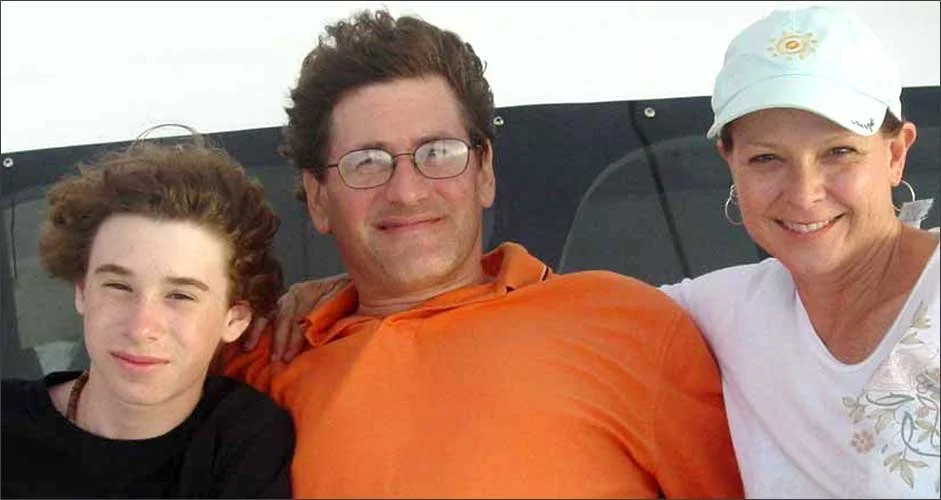
Daniel’s Medical Story
To understand who Daniel was at the time of his death, it is impossible to not take into account the long and tortuous medical experience that composed most of the last four years of his life. The following is a brief history of what he went through.
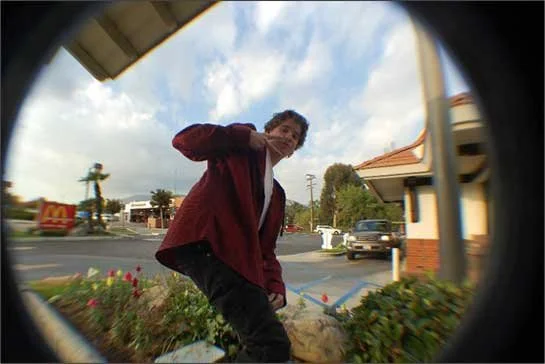
For the first dozen years of his life, Daniel’s health was pretty much like any other kid’s. As he grew older, and his love of rollerblading and snowboarding grew, he began to break bones more often than he should have. He would take a fall that most kids would shake off but, on him, it would result in anything from a minor to more serious fracture. This was the first indication that something deeper might be happening. Then, in 8th grade, he came down with the symptoms of appendicitis and was taken to the hospital for surgery. What the doctors found, though, was a healthy appendix next to a seriously inflamed illium (a piece of the small intestine that joins to the large, right next to the appendix). Tests were run and the diagnosis was Crohn’s Disease, an auto-immune condition that causes sections of the intestines to swell and ulcerate often causing total obstruction of the bowels requiring surgery to remove the obstructed areas. Fortunately the steroid treatment kept him from having to have that surgery.
Daniel and his family sought help from a local pediatric GI doctor and he was put on the regiment of a drug called Remicade. It’s used to reduce inflammation for a variety of conditions, including rheumatoid arthritis and Crohn’s. It is also a very strong and potentially dangerous drug, particularly if Daniel anticipated needing it for the rest of his life. The list of side effects was very scary. But something that can truly be said about Daniel is that from the initial bone and appendix surgeries, through all the harsh things he had to do after, he never was anything but resigned and brave. His courage was inspiring.
The Remicade treatment seemed to put his condition in remission but, in search of a less intensive treatment, the family sought another opinion. Daniel transferred to the GI group at Children’s Hospital Los Angeles under the care of Brynie Collins where they tried other drugs that didn’t require long trip to the hospital for infusions. He experienced bad side effects from these and was ultimately put on Humira, which is very similar to Remicade. And then a dip in a country lake changed his life forever.
In 2009, Daniel and his mom took a trip to visit their family in Columbia, South Carolina. Not too far is the rather spectacular Lake Murray. Very large, with hundreds of inlets, it’s a popular spot for vacation homes, camping and boating. Daniel visited a campsite with his cousins and went for a swim in the lake. Because the drugs he was on lowered his natural immune system, he became infected with two nasty bugs: Giardia and C-dif. Fresh water lakes harbor bacteria which can cause these infections.
Once he returned to Los Angeles, he began experiencing a new, more severe pain in his system than the Crohn’s. The doctors ran their tests and discovered the bacteria in his system. Following normal protocol, they prescribed (among other drugs) an antibiotic called Flagyl. It’s a known fact that certain antibiotics can cause complications in Crohn’s patients. What can’t be known is what specific antibiotic will react with each individual person. As we later discovered, Flagyl was toxic to his system, although there was no way to know that at the time. Very shortly after taking the drug he began complaining of incredible pain, high up in his digestive system (the Crohn’s pain was always low). He was seen at the emergency room at Children’s Hospital LA, (although the GI doc on call never examined him) on a Sunday and sent home with a laxative. Still hurting badly, he was brought to their clinic on Tuesday, examined, and sent home with more laxative. Finally, the next day, after he threw up bile, the docs at the Children’s ER ran a test to measure his lipase enzyme, the indicator for a condition known as Pancreatitis. A normal lipase number for a healthy child is around 100; Daniel’s was 12,000, one of the highest figures the hospital had ever seen. Clearly, the doctors at Children’s let him down by not running that test on his first trip to the ER.
The treatment for pancreatitis is simple: nothing by mouth, not even water. The pancreas must be allowed to rest and heal. So all nutrition is delivered intravenously or through a nose tube that bypasses the stomach and goes directly into the intestines. The condition is also excruciatingly painful, so he was given lots of intravenous painkillers. He went without food and water for three weeks, fed only through the “J-tube”. He even made a YouTube video of him finally removing that horrid tube! He was never so happy to see his room as when we he finally got out of the hospital. He had to maintain a very low fat diet for months.
He continued on being treated by the Children’s group but his primary doctor left on maternity leave. Unfortunately, the Giardia and C-dif infections returned the following year and he was given the same round of Flagyl antibiotics. While it would have been nice if they’d checked on what they’d given him a year ago prior to contracting the pancreatitis, they didn’t and prescribed the Flagyl again. Within days, he had the symptoms and was back at Children’s with a lipase number of 12,000 again was dangerously high. That is when we realized that it was an allergic reaction to the Flagyl that caused the pancreatitis. This time, he only had to be there 2 ½ weeks and it was especially stressful, since he had plans with his family to attend the Coachella Music Festival. His family kept reassuring him he’d recover in time to go and, thankfully, he did. But this second bout of pancreatitis, along with more weeks of intravenous drugs (like oxycodone and dilaudid), created problems he’d never recover from.
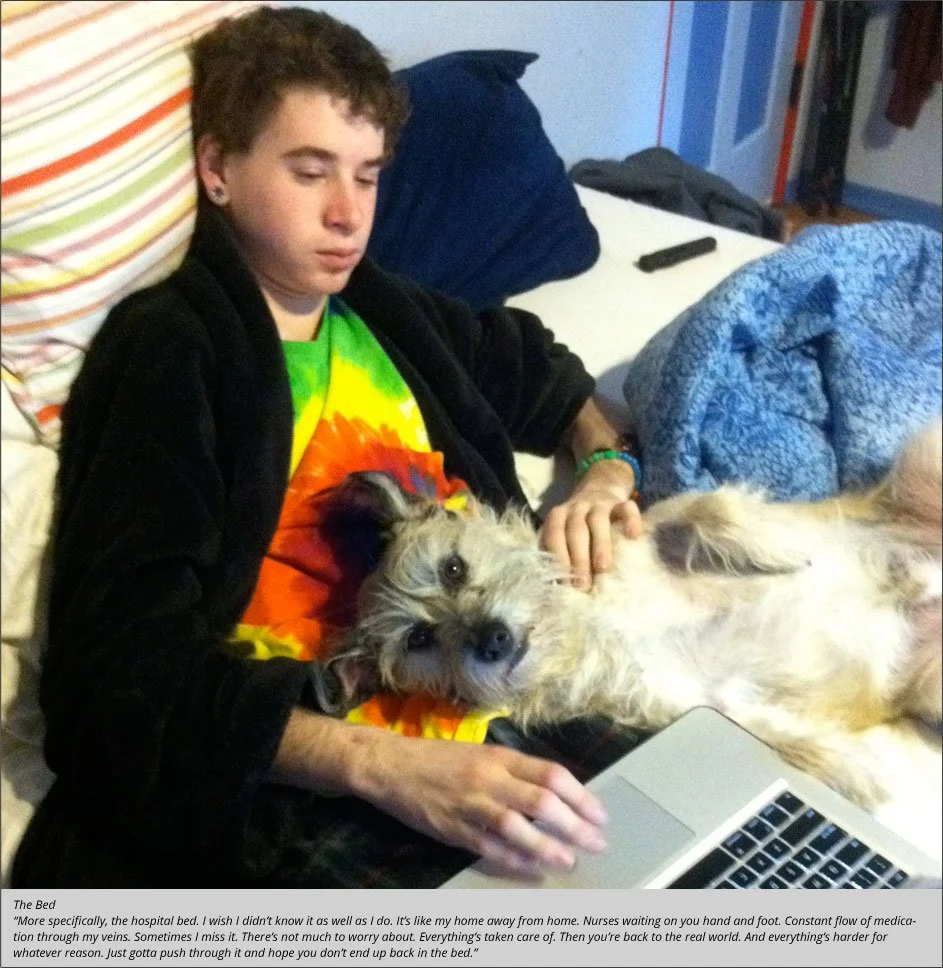
After he was released the second time, the pain in his stomach didn’t go away like it did the first. We decided to move his care to an adult GI specialist in Pasadena. Throughout the next 6 months, the doctor ran numerous tests – all the tests they could - unable to diagnose the specific cause of the constant pain in his stomach. All the while he was given painkillers intermittently and finally told he should see a psychiatrist. And because he had missed so much school, trying to catch up was too difficult and it left him angry and depressed because he was still having constant pain. He was now taking all kinds of others GI medications to help control the pain. His grades suffered and his general attitude became bleak. He talked about wanting to transfer high schools, which he eventually.
Frustrated and not knowing where to turn we decided he was placed back under the care of his original GI doctor from Children’s, Brynie Collins who had since returned after having her child to a private practice and knew his history. He was once again put on Remicade because the Humira was not working as well and that seemed to help keep the Crohn’ in check this past year. She diagnosed that he had developed a new condition in addition to the Crohn’s called visceral hyperalgesia, caused by the effect all of the opiate painkillers on his body. He was put on a drug called Elavil which has been known to help over a period of time (6-8 weeks). In the meantime he was put under the care of a pain management doctor and prescribed oxycodone IR in a low dose. Although the pain meds helped, he had missed so much school we decided that he should finish the year in home school. Unfortunately, the drug Elavil given for the chronic pain (visceral hyperalgesia) didn’t work and he began developing more of a dependency on the opiate pain meds.
Although a lot of attention was paid to Daniel’s intake of pain meds while he was in the hospital, there wasn’t a program in place to slowly wean him off them once he was discharged. They need to educate the parents that after receiving such large dosed of pain meds, his body chemistry would change and a dependency could occur and to have counsel and a plan.
Things came to a head in the summer of 2012. Daniel confessed he had a problem with supplementing his pain meds with more he gotten elsewhere and asked for help. Surprisingly none of the in-patient rehabs that were contacted could accommodate someone with his particular medical conditions. In desperation, the family turned to a local doctor and an anti-opiate treatment called Suboxyn. While the experience overall was not a good one (the side effects were too much for Daniel’s weakened condition), at least he had stemmed his use of the oxycodone. But once it was apparent the Suboxyn wasn’t the answer, things looked very grim, since he was still in a lot of pain.
It was in late August, 2012, that some good luck finally came his way. His family found out about a foundation called Whole Child LA, run by Lonnie and Paul Zeltzer of UCLA.
Dr. Lonnie Zeltzer is a Professor of Pediatrics, Anesthesiology, Psychiatry and Biobehavioral Sciences at the David Geffen School of Medicine at UCLA and the Director of the Pediatric Pain Program at UCLA Mattel Children's Hospital and Dr. Paul Zeltzer is a Board-certified physician in Pediatric Hematology and Oncology and a Clinical Professor in Neurosurgery, Geffen School of Medicine, University of California at Los Angeles. Since they specialized in treating children with chronic pain issues and they took on Daniel’s case right away. They were able to explain how and why Daniel was having so much pain. He explained that when you are on pain killers for a long time, the brain actually begins to remap neurological transmitters and CAUSES more pain. It essentially becomes a central nervous system disorder. All of the nerves in his stomach, the area he had so much pain during the pancreatitis, had become active when they normally would be dormant. So you actually feel real pain and it’s constant. Even drinking water sometimes hurt. His doctors put him on a program of low dose methadone and cymbalta, and his responded right away. Since the program deals with the integrative efforts of mind-body treatments for the patient, Daniel also saw a psychologist, physical therapy and biofeedback specialist, hypnotherapist, an acupuncturist and even a music therapist. The effect on him was dramatic. Although he continued to occasionally struggle with anger issues that had developed when he was in the depths of his addiction, his ability to calm down more quickly and take things in stride improved with every week. He was completely off the pain meds. In October, he got his provisional driver’s license and was showing real prowess and maturity behind the wheel. In November he was able to return to school full time and his schoolwork was back to its former high standards.
It was in this period of hope for the future that his life ended so tragically early. This account does not list the many times he was hospitalized for additional complications. In his seventeen years, he spent at least three times as much time in the hospital than most people do in a normal lifetime. We find comfort in that if he had to leave us that night, he did so without another trip there.
Shortly after his death, a fund was set up in his name by the Whole Child LA organization to help their work with other children in Daniel’s situation. All of the doctors work for little or no compensation and apply the fees toward the establishment of a permanent foundation. If you’d like to donate to Daniel’s fund, please use this link:
“Whole Child LA (WCLA) seeks to be the country’s premier provider of integrative mind-body treatment for children suffering pain, stress, and many common disabling conditions which can be arrested and treated before they become chronic lifelong struggles.”